

Kids
Professionals
Schools & Universities
The Ultimate
Tailor-Made
eLearning Platform
Se vuoi che suoniamo nella tua città, contattaci pure.

Speak
Explore conversation courses.
Read
Explore reading courses.
Write
Explore writing courses.


Molinara, The Music Town
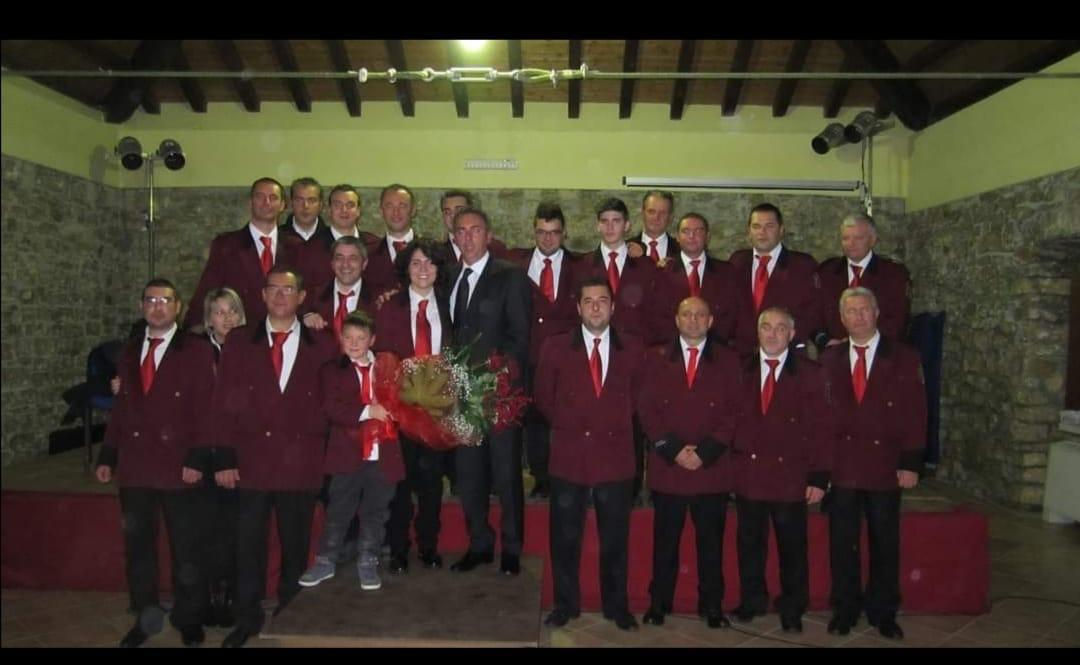
I would like to extend a heartfelt thank you to everyone who, over the years, has helped make the Molinara Band a true family and a symbol of our community.
For me, music is more than just passion: it is memory, tradition, and belonging. Every note tells the story of our town and of the generations who have dedicated time, sacrifice, and love to this wonderful community.
We will proudly continue to uphold the values of our band, so that Molinara always remains the "town of music."
I invite you to follow the City of Molinara page to stay updated on our initiatives, events, and moments that continue to unite our community through music.
With love and gratitude,
The Maestro - Rocco Baldino
The earliest records and memories date back to the late 1800s, when a small group of musicians called "li Cecca" existed.
The first real group was formed only at the beginning of the century, with the band called "Cinquecoppe" or "Cinquecoppole." It consisted of five members from the same family who played by ear, without any real knowledge of music as a discipline. When the bandleader laid down his arms, his sons decided to sign a contract with maestro Massimo Crafa of Pietrelcina.
Musical study proved quite difficult for some musicians, but despite this, with Crafa, the band achieved a good level of preparation, and over time it had numerous students. However, its activity lasted less than ten years due to his death. After the maestro's death, leadership of the band returned to the Cirocco brothers, but after a few years of mediocre activity, a rift occurred between the founding brothers, which led to the creation of two bands. The first was directed by Maestro Vincenzo Ferrarini, while the second remained family-run.
Maestro Ferrarini expanded the musical repertoire, and soon, with both old and new musicians, he managed to organize a band of over forty members. With Maestro Ferrarini's constant support, Rocco Cirocco, one of his students, was appointed director of the band after graduating.
After the end of World War II, Molinara, like other small Italian towns, found itself having to rebuild not only its physical structures but also its social and cultural fabric. In a period marked by suffering and a desire to rebuild, it was imperative to restore vitality and hope to the town. Maestro Cirocco, along with many musicians, came together to revitalize the town band, putting aside old rivalries. He was entrusted with the direction of a single band, to evoke the rebirth necessary to rebuild a better future. As time went by, it became difficult for the maestro to juggle his various commitments, so he had to leave his post to his cousin Carmelo Cirocco, who was considered the only one with the necessary skills for the position, having served as a non-commissioned officer in music during his military service.
Maestro Cirocco made his home and his expertise available to the community, to educate the young and old generations of the time by introducing them to music and its study. In addition to being a maestro, he also composed many marches that are still performed today. Furthermore, a small square in our small town was recently named after him, a symbol of the mark he left on our community.
In 1982, Carmelo Cirocco was replaced by his student Rocco Callisto. He too has continued Maestro Cirocco's work, continuing to train new young musicians who are still members of the current band today.
Difficulties abounded, and so in 1999, parish priest Don Franco Iampietro reorganized the New Band: "Città di Molinara," with conductors Rocco Baldino and Pasqualino Leonardis taking over. This transition marked a new phase for the band, allowing it to renew itself and consolidate its role in the community.
During the same years, a historic event helped revitalize it for the first time: the inclusion of women. Nicoletta Coopt was the first girl to officially join the group. Her participation, not only represented a significant social change, but also served as an inspirational example for other girls.
In 2002, the band participated in the TV7 program "Paese che vai, usanze che trovi," and in 2003, it took part in Giorgio Panariello's show "Torno sabato." This particularly significant moment allowed the Molinara tradition to be brought to the other side of the world. In 2003 and 2007, the band joined the Molinara community in Adelaide, Australia, to celebrate the patron saint of Molinara: "San Rocco."
Over the years, the band has grown, thanks in large part to the commitment and passion of young people, many of whom attend the Music High School and the Conservatory. The constant interaction between generations has allowed the band to continue to grow and experiment. Regular events include concerts held during the Christmas holidays and during the summer, where the band has performed film scores, classical music, tributes to singer-songwriters, and band and non-band repertoire. It also organizes various activities that promote musical culture: film clubs, music workshops for children and teenagers, and band gatherings.
On July 18, 2025, the band met the young singer-songwriter Alfa in one of his concerts at the Vulcano Buono shopping center in Nola, and 8 members performed the song "A me mi piace" (by Alfa and Manu Chao) in front of an audience.

Condividi con i tuoi amici
Scansiona il QR Code e buon divertimento!
Listen to our music
All videos
Don't know the monument in front of you? Discover it with Elitaly!
Spread Italian culture with us!
Event photos
Let Elitaly inspire you with authentic experiences. Italy, home to the largest number of UNESCO sites in the world, extends far beyond the Colosseum, Piazza San Marco, and Milan Cathedral. Discover the colors of the Dolomites, the beaches of Sardinia and Sicily, timeless villages like Matera, and the jewel-like islands of Ischia, Capri, and Paestum. Experience it in a thousand ways: sailing between the Costa Smeralda and the Aeolian Islands, hiking trails like the Path of the Gods, or savoring traditional dishes and local wines.






Go on tour with Elitaly
Info and contacts
Nuova Banda “Città di Molinara” APS
Maestro: Rocco Baldino
President: Nicoletta Coopt
Vice-President: Giovanni Spagnoletti
Management

Dove mangiare
Che tu stia cercando ristoranti eleganti, trattorie locali o bar alla moda, abbiamo quello che fa per te... basta contattare il nostro team!
Dove dormire
B&B, hotel storici, residenze di charme: possiamo darvi consigli preziosi per rendere indimenticabile il vostro soggiorno. Contattateci subito!
Attrazioni
La città offre tantissime cose: dall'aperitivo alla visita ai musei, dai parchi se si è in compagnia di famiglia e amici ai quadri di inestimabile valore accessibili gratuitamente nel cuore della città. Fateci sapere le vostre preferenze!
Helpdesk
Per qualsiasi emergenza o domanda, contatta il team di Elitaly. Siamo qui per aiutarti. Possiamo fare molto per te!
MUSEI
Uffizi
Accedi allo shop di Elitaly per leggere e scaricare l'audioguida, sempre con te!


